
Experience that starts with the property
Installations are carried out by an experienced installation team with more than 25 years in the industry. Technology continues to change, but the fundamentals have not: every system still needs to suit the property, the people using it and the conditions it will work in every day.
We look beyond panel count to the roof, electrical installation, occupancy and larger loads around the home. The proposed system should make sense now and remain useful as the property changes.
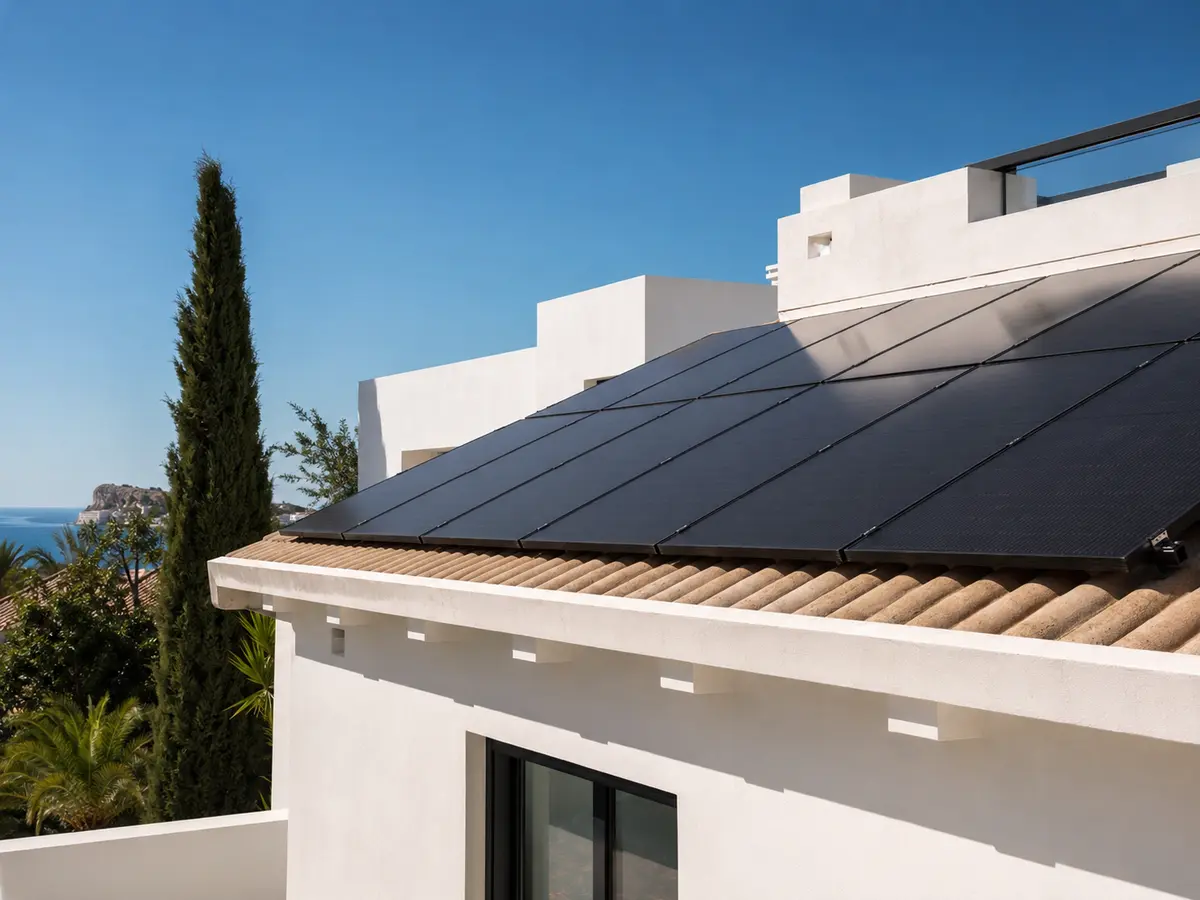
One property, one joined-up energy plan
Solar panels are often only the starting point. Battery storage, pool heating and efficient air conditioning can all affect when a villa uses electricity. Treating them as separate purchases can lead to equipment that is poorly matched or unnecessarily expensive.
The system should be considered as a whole. That may mean solar panels with no battery, a Tesla Powerwall for evening demand or a Kosner climate system timed to make better use of daytime generation. The recommendation follows the property rather than a fixed package.
Why local villas need a proper survey
Costa Blanca homes are rarely identical. Roofs can combine pitched tiles and flat terraces. Mature trees, chimneys and the Montgó can change the shading pattern while coastal heat and exposure influence where equipment should be placed.
Occupancy matters too. A full-time home has a different energy profile from a villa used intensively for a few summer months. The survey brings those details together before the array, inverter or battery is specified.
Equipment chosen for the job
Established energy brands offer different system architectures, and the proposed architecture should be justified against the needs of the property. Enphase microinverters can be useful on complex or partly shaded roofs. SolaX hybrid systems can combine inverter and compatible storage while Tesla Powerwall offers another route for home battery storage.
For cooling and pool heating, Kosner equipment can be considered alongside the available solar production and electrical capacity. Brand matters, but correct design, installation position and commissioning matter just as much.
Clear advice before anything is installed
A useful proposal should explain why the system has been recommended. You should be able to see the proposed layout, what the equipment is intended to cover and which assumptions sit behind any production or savings estimate.
If a smaller array is the better fit or a battery is unlikely to add enough value, that should be clear in the proposal. The goal is a well-judged energy system, not the longest equipment list.
A practical handover and long-term view
Good installation includes the details that remain visible after the team leaves: tidy cable routes, sensible equipment positions and monitoring that an owner can understand.
Likely changes such as future storage, electric vehicle charging or a new heat pump should be considered early. Allowing for them early can prevent major equipment from becoming a dead end later.
Local coverage across Costa Blanca North
Jávea/Xàbia is at the centre of our service area. We also work in Dénia, Moraira, Benitachell and Teulada. Assessments and installations are available for suitable properties across these Costa Blanca North locations.
The first step is a solar assessment based on the property. It gives you a clear view of what should work before you decide whether to proceed.
Questions homeowners ask
Frequently asked questions
How much experience does the installation team have?
The installation team brings over 25 years of experience in the energy sector, covering solar panels, battery storage, heating and efficient cooling.
Can batteries be installed as well as panels?
Yes. Battery storage can be assessed alongside the solar array, evening electricity use and any backup priorities. It is recommended only where it has a clear role.
Which areas does Jávea Solar cover?
Jávea Solar works across Jávea and Costa Blanca North, including Dénia, Moraira, Benitachell and Teulada.
Can a system be designed around a holiday home?
Yes. Seasonal occupancy, remote monitoring, pool equipment and summer cooling are considered so the system is not sized around an unrealistic year-round average.